
By Dr. Francisco Juárez del Dago - Specialist in Urology and Andrology. GUA Urology and Andrology, Gran Canaria
Table of Contents
- What is andropause?
- Frequent symptoms
- Causes and hormonal changes in men
- Physical, emotional and social impact
- How it is diagnosed
- Treatment and comprehensive approach
- When to consider testosterone therapy (TRT)?
- Habits that make a difference
- Frequently asked questions
- Request an appointment
What is andropause?
Andropause, also called late-onset male hypogonadism, describes a set of physical, sexual and emotional symptoms associated with the progressive decrease of testosterone in men over the years. It is not an abrupt cessation like menopause, but a gradual decline that may or may not have relevant clinical repercussions.
At GUA we differentiate between normal hormonal aging and androgen deficiency with an impact on your quality of life, in order to provide you with the safest and most effective plan of action.
Frequent symptoms
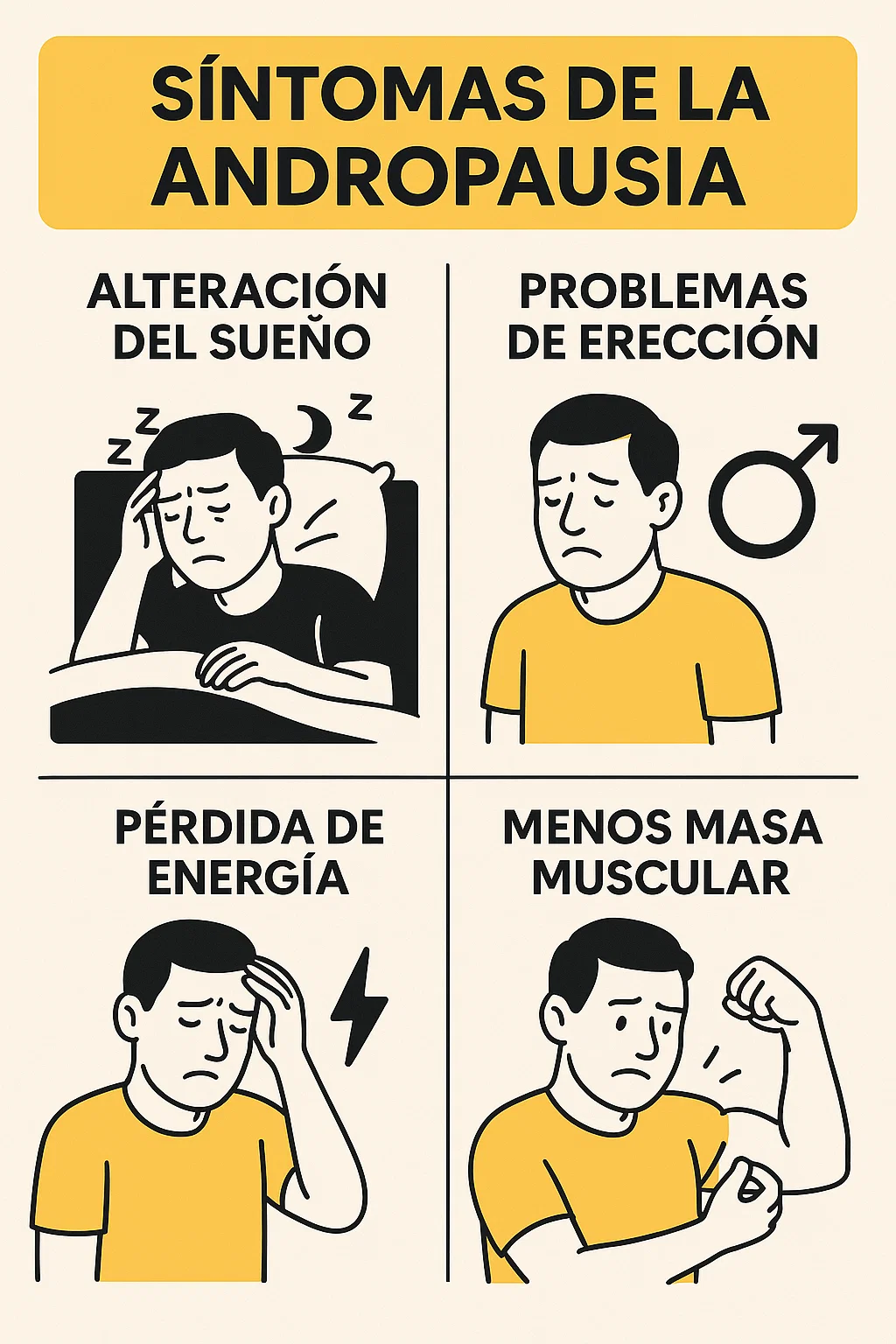
- Decreased libido and/or erectile dysfunction. If you identify yourself, check out our article: erectile dysfunction: real solutions.
- Fatigue, reduced vitality and motivation.
- Loss of muscle mass and strength; increase in abdominal fat.
- Mood swings, irritability or low mood.
- Decreased body hair or bone density.
- Urinary or prostate discomfort (useful tips on how to improve the health of your prostate).
If these symptoms affect your daily life, consult us: an early diagnosis allows you to act and recover your well-being.
If these symptoms affect your daily life, consult us: an early diagnosis allows you to act and recover your well-being.
Causes and hormonal changes in men
Testosterone, regulated by the hypothalamus-pituitary-testes axis, is involved in libido, sexual function, muscle mass, fat distribution, bone density and psychological well-being. With age it may decline and be modulated by:
- Excess visceral fat and sedentary lifestyle.
- Type 2 diabetes, hypertension, metabolic syndrome.
- Sleep disorders (e.g., untreated apnea).
- Chronic stress, anxiety or depression.
- Drugs that interfere with the hormonal axis.
Physical, emotional and social impact
Beyond the hormonal aspect, andropause can be experienced as a challenge to identity and self-esteem. We attend not only to the physical symptoms, but also to their emotional and couple repercussions when necessary.
How it is diagnosed
The assessment combines compatible symptoms with fasting and morning hormone analysis:
- Clinical history and examination: sexual, metabolic and mood symptoms; urological examination and prostate orientation according to age and history.
- CBC: total testosterone in two morning determinations. In borderline values, consider free testosterone and LH/FSH. Rule out secondary causes (thyroid, vitamin deficiency, sleep apnea, drugs, etc.).
If pelvic symptoms are present, see our focus on prostatitis.
Treatment and comprehensive approach
The goal is not just to "normalize a number", but to recover your overall health. At GUA we combine:
1) Therapeutic exercise
- Strength 2-3 days/week to preserve muscle mass and metabolism.
- Moderate cardio for vascular health and energy.
- In selected cases of erectile dysfunction, shock wave physiotherapy should be discussed with your specialist.
2) Nutrition and metabolic control
- Eating pattern rich in quality proteins, vegetables, fruits and healthy fats.
- Reduction of sugars and ultra-processed foods; target visceral fat loss when excess exists.
3) Sleep health and stress management
- Sleep hygiene (7-8 h) and apnea screening/treatment if suspected.
- Stress management strategies (mindfulness/therapy). When it affects the sexual sphere, clinical sexology can help.
4) Specific procedures and options
- Erectile dysfunction treatments (medical and minimally invasive): learn about our real solutions.
- In selected Benign Prostatic Hyperplasia (BPH), consider steam heat therapy (Rezum) or our treatment page. Green Laser surgery may also be considered according to medical criteria.
The basis for success is a combination of lifestyle + personalized treatment. Small, sustained changes add up to big results.
When to consider testosterone therapy (TRT)?
TRT is considered in men with persistent symptoms and compatible laboratory tests, after ruling out secondary causes and explaining benefits, risks and follow-up. It is not appropriate if short-term fertility is sought. It requires periodic controls (hormones, hemogram, PSA) and clinical review.
Habits that make a difference
- Progressive strength plan + daily steps.
- Sufficient protein and vegetables at every meal.
- Sleep routine (7-8 hours) and exposure to natural light.
- Alcohol and tobacco: limit/avoid.
- Periodic urological check-ups; practical guide in prostate health.
Do you notice changes in energy, sexual desire or mood? We help you to evaluate it and recover your wellbeing. Book your appointment online or call us at 928 264 695.
Frequently asked questions
Does andropause affect everyone equally?
No. Hormonal decline and symptoms vary among individuals; therefore, the evaluation is individualized.
Can I get better without medication?
Yes: strength exercise, weight control, good sleep and stress management bring remarkable improvements. When this is not enough, we explore other therapeutic options.
Is TRT forever?
Not necessarily. It depends on the case, the clinical response and the patient's objectives; always with medical follow-up.
Request an appointment
At GUA Urology and Andrology we perform personalized diagnosis and treatment to help you recover your energy, sexual health and well-being.
"Detecting and treating andropause early is key to an active, full and healthy maturity."
Explore more content in Urology (blog) or check out our erectile dysfunction page (service).