Category Archives: Urology

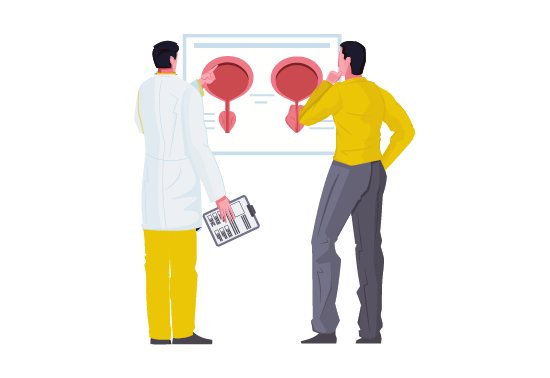
Illustration bladder urethra

Urethral Stenosis: A Comprehensive Guide

By Dr. Héctor Ajubita Fernández - Urology Specialist. GUA Urology and Andrology.

Urethral stricture: a complete guide to understanding and treating it

Table of Contents

  1. What is urethral stricture and why does it matter?
  2. Symptoms and how it affects day-to-day life
  3. Diagnosis: what tests do we perform
  4. Treatments: from the simple approach to reconstruction
  5. Frequently asked questions
  6. Practical tips while waiting for the appraisal
  7. How we accompany you in GUA
  8. Make an appointment today

What is urethral stricture and why does it matter?

The urethral stricture is more than a narrowing of the urinary tract: it can significantly alter the quality of life. When pain, difficulty urinating or the sensation of incomplete emptying occurs, routine changes completely. Early detection and treatment prevents complications such as infections, urinary retention or progressive damage to the bladder and even the kidneys. The earlier you consult, the simpler the solution is usually.

Symptoms and how it affects day-to-day life

  • Weak or broken stream, straining to urinate, stinging and dribbling.
  • Recurrent urinary tract infections and sensation of incomplete emptying.

In addition to the physical aspect, many patients describe social limitations (constantly looking for toilets), anxiety about the possibility of retention and discomfort in their intimate life. Our approach seeks to restore your quality of life, not just "fix the urethra".

Diagnosis: what tests do we perform

At the first visit we explain each step to you. We use safe and well-tolerated tests to confirm the diagnosis and plan the best treatment:

  • Uroflowmetry: measures the strength and quantity of the jet.
  • Urological ultrasound: evaluates bladder and rules out complications.
  • Retrograde urethrography: shows narrowing.
  • Urethrocystoscopy: direct vision of the urethra with a flexible camera; it is performed under local anesthesia and the diagnosis is immediate. It is usually completed in minutes.

The objective is always to confirm the diagnosis in order to decide the most effective option in your case.

Treatments: from the simple approach to reconstruction

There is no universal treatment; we individualize each case. These are the most frequent options:

Urethral dilatations

Ambulatory procedure useful in mild stenosis. If it fails or the stricture recurs, more definitive alternatives should be considered.

Endoscopic internal urethrotomy

Minimally invasive technique that incises the narrowing from the inside, with endoscopic scalpel or laser. It is usually recommended in initial cases, congenital or with little fibrosis.

Paclitaxel Balloon Catheter Dilatation (OPTILUME)

A novel procedure that can be combined with urethrotomy in the same procedure. Paclitaxel reduces postoperative fibrosis and improves results, also on an outpatient basis.

Reconstructive surgery (urethroplasty)

Recommended in complex or recurrent stenosis. It offers the highest success rates and long-lasting results. In men with short strictures that do not affect the penile urethra, end-to-end anastomosis (resection of the diseased segment and joining the ends) can be performed. In long strictures or strictures that affect the penile urethra and in women, enlargement urethroplasty with buccal mucosa grafts (cheek, tongue or lip) is chosen. Two-stage surgeries are reserved for complex cases.

At GUA Urology and Andrology we have experience in urethral reconstructive surgery to offer definitive solutions in severe or recurrent strictures.

Frequently asked questions

Can urethral stricture recur?

Yes, it can in some cases. That is why regular follow-up after treatment is key.

Is the treatment painful?

The techniques are performed under anesthesia and are usually painless. The postoperative period is usually well tolerated, with progressive recovery.

Can it affect sex life?

After successful treatment, it is usual to resume a normal sex life. At GUA we also attend to this aspect to offer peace of mind and confidence.

Practical tips while waiting for the appraisal

  • Adequate hydrationlimit bladder irritants (alcohol, excessive coffee).
  • Do not delay urination when the desire arises.
  • In case of fever, severe pain or inability to urinate, consult urgently.

Important: these tips are not a substitute for medical evaluation. Urethral stricture always requires evaluation by a specialist.

How we accompany you in GUA

At GUA Urology and Andrology we offer a confidential, close and decisive environment. We perform the complete study (uroflowmetry, ultrasound, urethrography, endoscopy), indicate the most appropriate treatment -from outpatient options to reconstructive surgery- and plan the follow-up to prevent relapses.

Make an appointment today

Take the next step towards your wellness. Schedule your assessment with our specialists in Gran Canaria:

"Your urological health deserves specialized care. We're here to help."

nerve-pudendum-man

The pudendal nerve: the great unknown behind pelvic pain and sexual dysfunction in men

By Dr. Héctor Ajubita Fernández - Specialist in Urology and Andrology. GUA Urology and Andrology.

Table of Contents

  1. What is the pudendal nerve?
  2. Functions of the pudendal nerve in males
  3. Pudendalgia: symptoms and warning signs
  4. Diagnosis: Nantes criteria and available tests
  5. Treatments for pudendal nerve entrapment
  6. Impact on male quality of life
  7. How we help you at GUA Urology and Andrology
  8. Frequently asked questions
  9. Request an appointment

What is the pudendal nerve?

The pudendal nerve is one of the most important nerves in the male pelvic floor.
It originates from the sacral roots S2–S4 and runs through the pelvis, passing through critical areas such as Alcock's canal.
Along this path, it can suffer irritation, inflammation, or entrapment, causing pain and functional disorders known as pudendalgia.

Despite its importance, it remains a great unknown: many men suffer for years from pelvic pain or sexual problems without reaching an accurate diagnosis.

Functions of the pudendal nerve in males

The pudendal nerve serves several key functions:

  • Sensitive: provides sensitivity to the penis, scrotum, perineum, anus and urethra.
  • Motor: controls essential muscles such as the external urethral sphincter and the anal sphincter.
  • Autonomic: involved in erectile function and ejaculation.

Therefore, when this nerve is compromised, the symptoms affect not only the male pelvic floor,
but also the sexual and urinary spheres.

Pudendalgia: symptoms and warning signs

Entrapment of the pudendal nerve causes a set of very characteristic symptoms. Recognizing them is key in order not to confuse them with other urological pathologies.

Pelvic pain

  • Discomfort or severe pain in the perineal area.
  • Pain increases with sitting and improves with standing or sitting on the edge of the chair.
  • It may coexist with foreign body sensation in the urethra or rectum.

Urinary symptoms

  • Urinary urgency and need to urinate frequently.
  • Pain or stinging when urinating (dysuria).
  • Sensation of incomplete emptying of the bladder.

Sexual alterations

  • Erectile dysfunction, sometimes resistant to conventional drugs.
  • Painful ejaculation or discomfort during sexual intercourse.

This condition is often confused with chronic prostatitis,
which delays correct diagnosis and treatment.

Diagnosis: Nantes criteria and available tests

Diagnosis is based on the Nantes criteria, a set of clinical points that help identify pudendal neuralgia:

  • Pain that worsens when sitting.
  • Absence of pain during the night.
  • Pain that does not radiate outside the pudendal nerve territory.
  • Significant improvement after an anesthetic pudendal nerve block.

Imaging tests can provide information, but the most reliable confirmation is a positive response to a diagnostic block.

Treatments for pudendal nerve entrapment

Treatment is usually staggered, with less invasive options being sought first:

  • Conservative measures: pelvic floor physiotherapy, postural changes, decompression exercises.
  • Pharmacological treatment: neuromodulatory drugs for neuropathic pain.
  • Anesthetic blocks: applied with ultrasound or radiological control, they provide relief and confirm the diagnosis.
  • Neuromodulation: electrical stimulation of sacral roots or the pudendal nerve itself.
  • Decompression surgery: indicated only in selected and refractory cases.

Impact on male quality of life

Chronic pelvic pain and pudendal nerve dysfunction affect men's personal, sexual, work, and emotional lives.
Early diagnosis is essential to avoid years of suffering and improve quality of life.
The good news: effective treatments are available.

How we help you at GUA Urology and Andrology

At GUA Urology and Andrology, in Las Palmas de Gran Canaria, we have a team specializing in male pelvic floor dysfunction.
We take a comprehensive approach: we combine accurate clinical diagnosis, advanced testing, and pelvic physiotherapy, tailoring each treatment to the individual case.

Meet us: our medical team.

Frequently asked questions

  • Can pudendal nerve entrapment be cured? Many patients achieve significant improvement with physical therapy, blocks or neuromodulation.
  • Is it the same as chronic prostatitis? No. Although they share symptoms, the cause and treatment are different.
  • How long does it take to improve? It depends on each case and the time of evolution. Early detection facilitates recovery.

Request an appointment

If you suffer from pelvic pain or sexual dysfunction that could be related to the pudendal nerve, don't wait any longer.
Our team can help you regain your quality of life:

"Your pelvic and sexual health deserves specialized care. We're here to help you."

man exercising

Male Pelvic Floor: A Specialist's Guide

By Mrs. Adoración Gil - Physiotherapist, specialist in pelvic floor treatment. GUA Urology and Andrology, Gran Canaria

Table of Contents

  1. What is the male pelvic floor?
  2. Key functions of the pelvic floor in men
  3. Symptoms of a weakened or tight pelvic floor
  4. How to care for and strengthen your pelvic floor?
  5. When to see a specialized physiotherapist?
  6. Make an appointment today

What is the male pelvic floor?

The pelvic floor is a set of muscles, ligaments and tissues that form a kind of "hammock" at the base of the pelvis. In men, it supports fundamental organs such as the bladder, prostate, rectum and genital structures. Its proper functioning is essential for good urinary, sexual and digestive health.

Key functions of the pelvic floor in men

The pelvic floor is actively involved in:

  • Urinary and fecal containment: avoiding involuntary leakage.
  • Urination control: allows to start and stop the flow of urine.
  • Bladder and prostate support: especially during physical exertion (coughing, laughing, lifting).
  • Sexual function: contributes to erection and ejaculation through reflex muscle contractions.
  • Prevention of dysfunctions: such as prolapse, chronic pelvic pain or problems after prostate surgery.

Symptoms of a weakened or tight pelvic floor

Both weakness (hypotonia) and excessive tension (hypertonia) of the pelvic floor can cause discomfort:

  • Urine leaks when coughing, laughing or straining.
  • Sensation of urgency to urinate or incomplete voiding.
  • Weak or interrupted urine stream.
  • Pain in perineum, testicles or penis.
  • Discomfort during or after sex.
  • Erectile dysfunction or ejaculation problems.
  • Prostatodynia or chronic pelvic pain.
  • Heaviness or pressure in the pelvic area.

These symptoms are frequent in athletes, men with chronic stress or after prostate surgery.

How to care for and strengthen your pelvic floor?

Strengthening the pelvic floor is not just a matter of "squeezing". It is about improving strength, coordination and control:

  • Kegel exercises: specific for men, guided by a physiotherapist.
  • Biofeedback and electrical stimulation: if more precise training is required.
  • Avoid bad habits: such as holding urine, pushing when urinating or sitting for long hours.
  • Improve your posture and breathing: key to good muscle control.
  • Avoid chronic constipation: taking care of your diet and intestinal transit.

When to see a specialized physiotherapist?

Consult a male pelvic floor specialist if:

  • You have persistent urinary, sexual or digestive symptoms.
  • You have undergone urological surgeries (such as prostatectomy).
  • You suffer from chronic pelvic pain or prostatodynia.
  • You suffer from urinary incontinence or erectile dysfunction.
  • You are in the process of postoperative rehabilitation.

Proper treatment improves your quality of life, self-esteem and personal relationships.

Make an appointment today

At GUA we have an expert and close team that accompanies you from diagnosis to personalized treatment.

"Your pelvic floor matters too. Taking care of it is taking care of you."

Physiotherapist, specialist in pelvic floor treatment
(0034) 928 264 695
urinary tract infections in men in summer

Urinary tract infections in men: how to prevent and treat them in summer (guide 2025)

By Dr. Rubén Cutanda - Urology Specialist. GUA Urology and Andrology, Gran Canaria

Table of Contents

  1. Why do urinary tract infections increase in men in summer?
  2. Quick tips to prevent urinary tract infections
  3. Risk factors in men
  4. Most common symptoms and clinical forms
  5. New diagnostic tools 2025
  6. Effective summer prevention
  7. When to consult a urologist?
  8. Make an appointment today

Why do urinary tract infections increase in men in summer?

Urinary tract infections in men, although less frequent than in women, clearly increase during the summer. This pattern is well documented by medical studies. Factors such as heat, dehydration and some summer habits contribute to the increase of these infections.

  • Reduced hydration: causes more concentrated urine, which irritates the bladder and favors bacterial proliferation.
  • High temperatures: cause sweating and reduce urinary volume.
  • Prolonged use of wet clothing, such as wet swimsuits, creates an environment conducive to bacteria.
  • Holding urine: long trips or outdoor activities favor bacterial multiplication.
  • Increased sexual activity: increases the risk of urinary tract infections and STIs.

Quick tips to prevent urinary tract infections

Men can take simple steps to avoid urinary tract infections, especially in hot weather:

  • Drink 2 to 3 liters of water a day, even if you are not thirsty.
  • Change bathing suits after swimming and shower with clean water.
  • Urinate every 3-4 hours and always after sexual intercourse.
  • If you have a foreskin, retract it to urinate and avoid using toilet paper on the glans.

Preventing urinary tract infections in men is easier than it seems if you follow good daily habits.

Risk factors in men

Urinary tract infections in men are often associated with medical or anatomical conditions. Some common factors include:

  • Benign prostatic hyperplasia (BPH): hinders complete emptying of the bladder.
  • Unprotected sex: especially anal sex.
  • Urinary lithiasis or malformations: anatomical in the urethra, foreskin or kidneys.
  • Poorly controlled diabetes: increases the risk of infections due to altered defenses.
  • Urological catheterization: or frequent cystoscopies.
  • Immunosuppression: transplant, HIV or biological treatments.

Most common symptoms and clinical forms

Uncomplicated low ITU

Typical symptoms: itching when urinating, urgent and frequent need to urinate, sensation of incomplete voiding. No fever.

Acute prostatitis

Fever, pain in the perineal area and urinary difficulty. There may be retention. Requires urine culture and follow-up.

Pyelonephritis

Low back pain, high fever, general malaise. May require imaging tests if not improved with antibiotics.

New diagnostic tools 2025

Thanks to medical advances, it is now possible to diagnose urinary tract infections in men more quickly and effectively:

  • Flow-UTI®: flow cytometry that rules out infection in less than one minute.
  • Multiplex PCR: useful in hospitals to detect antibiotic resistance.

Effective summer prevention

In addition to the above tips, keep the following in mind:

  • Do not withhold urine for prolonged periods of time.
  • Use a condom for casual or anal sex.
  • Check the BPH if you notice a weak or dribbling stream.
  • Check your blood glucose if you are diabetic.
  • Wear dry underwear after swimming.

When to consult a urologist?

Go for a medical check-up if you have any of the following symptoms:

  • High fever or chills.
  • Flank or lower back pain.
  • Presence of blood in the urine.
  • Severe difficulty urinating.
  • Persistent symptoms after 48 h of antibiotic.
  • Testicular pain or discharge from the urethra.

Early diagnosis avoids complications and unnecessary treatment.

Make an appointment today

Do you have urinary discomfort or do you want to prevent problems this summer?

At GUA Urology and Andrology we offer you an expert diagnosis and a personalized approach.

References

  • EAU Guidelines. Urological Infections. 2025.
  • IDSA Clinical Practice Guideline for UTIs in Adults. 2025.
  • ECDC. Antimicrobial Resistance in Europe 2024 Report.
  • EMA. EPAR: Tebipenem pivoxil HBr, 2025.

"Urinary tract infections in men: more common in summer, but always preventable."

Dr Pablo Juárez del Dago with the drug Bioksan Peseax

Natural Remedies for the Prostate: A Comprehensive Guide

Prostate health is critical to a man's overall well-being, but is often overlooked until problems arise. Maintaining proper balance in this area not only impacts urinary function, but also plays a crucial role in reproductive and hormonal health. Fortunately, there are natural solutions backed by scientific studies that can support optimal prostate function. In this article, we explore the benefits and the most effective natural ingredients to care for your prostate and improve your quality of life.

Prostate health benefits

Prostate care offers important benefits for men's health, such as the following:

Maintenance of prostate function: Contributes to the proper functioning of the prostate and prevents possible related disorders.

Hormonal balance: Helps regulate dihydrotestosterone (DHT) levels, a key factor in prostate enlargement, promoting a healthy hormonal balance.

Reproductive function support: Supports male reproductive health by maintaining optimal levels of testosterone and other hormonal factors.

Key ingredients for prostate wellness

Here are some natural ingredients that have been shown to be effective in supporting prostate health:

Enotprost® (Epilobium Angustifolium): This patented extract is known to inhibit 5-alpha-reductase, an enzyme responsible for the conversion of testosterone to DHT. By reducing DHT levels, it helps prevent prostate enlargement. In addition, it possesses anti-inflammatory and antioxidant properties that improve overall health. Clinical studies have demonstrated its efficacy in improving urinary symptoms and quality of life in men.

Serenoa repens and Pygeum africanum: This combination of herbal extracts works synergistically with Enotprost® to optimize the effects in reducing DHT, improving urinary flow and preventing prostate overgrowth. They are recognized for their anti-inflammatory and urinary function support properties.

Zinc, Selenium and Vitamin B6: These micronutrients are essential for hormonal balance and cellular protection. Zinc and selenium contribute to the maintenance of healthy testosterone levels, while vitamin B6 plays a crucial role in overall well-being and the reduction of oxidative stress in cells.

Peseax: a natural option for your prostate health

If you are looking for an option that combines all these effective ingredients in one supplement, Peseax is an excellent choice. This product has been formulated with extracts such as Enotprost®, Serenoa repens and Pygeum africanum, as well as key micronutrients such as Zinc, Selenium and Vitamin B6. With its potent combination of natural ingredients, Peseax offers a comprehensive approach to support your prostate health, promoting hormonal balance and proper urinary function.

The use of Peseax can help you keep your prostate in optimal condition and reduce urinary symptoms associated with prostate enlargement. Remember that, although natural supplements can be a great ally, it is important to complement them with healthy habits such as a balanced diet and regular exercise.

A holistic approach to male wellness

Prostate health care depends not only on natural ingredients, but also on adopting healthy habits in your daily routine. A balanced diet, regular exercise and regular visits to the specialist are essential to keep the prostate in optimal condition. If you experience urinary discomfort or have doubts about your prostate health, do not hesitate to consult one of our specialists, such as Dr. Pablo Juarez del Dago, who, in addition to appearing in the photo below, will be able to offer you the best guidance on the options available to take care of your urological health.


1 2 3 5
Hello! How can we help you?

REQUEST APPOINTMENT