
By Dr. María Fernanda Peraza Godoy - Urologist and Andrologist specialized in Sexual Medicine.
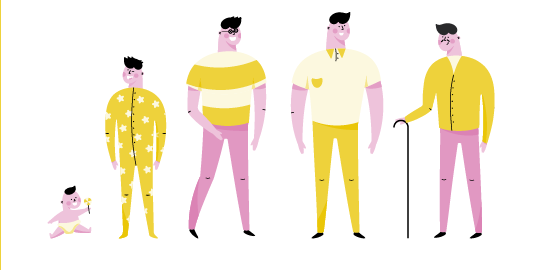
Male sexual health is not an isolated episode, but a journey that accompanies men at every stage of life. From puberty to old age, biological, emotional and social changes influence how men experience their sexuality, how they care for it and what challenges they face.
Throughout this journey, a central theme recurs: men also need permission to take care of their sexual health, express vulnerability and ask for help without fear of losing virility. In this article we explore men's sex lives at every stage and how to enhance sexual well-being with a holistic approach.
Table of Contents
- Puberty: awakening of sexuality and first cares
- Youth and early adulthood: prevention and healthy habits
- Middle adulthood: sexuality as a health sentinel
- Maturity: redefining masculinity and coping with andropause
- Old age and longevity: active sexuality as a source of well-being.
- Final reflection: vulnerability as a strength
- Make an appointment today
Puberty: awakening of sexuality and first cares
Puberty marks the beginning of sexual maturation. Between the ages of 9 and 14, boys experience hormonal activation that triggers testosterone production, testicular growth, penile development, the appearance of pubic hair and a deeper voice.
Major challenges at puberty
- Genital hygiene and care of the foreskin: a simple explanation on how to properly wash the penis prevents balanitis and infections.
- STI education: condom use, consent and mutual respect in relationships.
- Healthy approach to sexuality: understanding that sexuality is not about performance, but about self-knowledge and healthy bonds.
Youth and early adulthood: prevention and healthy habits
In the second and third decades of life, men reach their maximum physical and sexual potential, but also consolidate habits that will impact their future.
Key care at this stage
- STI prevention: increase in cases of chlamydia, gonorrhea and syphilis. Recommendation: periodic testing and consistent use of condoms.
- Lifestyle construct: what a man does in his 20s and 30s (diet, exercise, sleep, tobacco or alcohol consumption) has a direct impact on his fertility and future sexual health.
- Stress and parenthood: anxiety and work pressure can affect erectile function.
- Male fertility: healthy habits today are the best investment for tomorrow.
Male fertility is not unlimited: start taking care of it from a young age.
Middle adulthood: sexuality as a health sentinel
Between the ages of 40 and 55, sexuality becomes an indicator of overall health. Erectile dysfunction may be the first symptom of cardiovascular disease.
Key aspects
- Erectile dysfunction as a warning sign: consulting a urologist can save your life, not just your sex life.
- Hormonal check-up: detect incipient hypogonadism and differentiate it from normal aging.
- Metabolic control: obesity, glucose and lipids influence testosterone and sexual function.
- Stress management: professional and family responsibilities impact libido.
Sexuality is a mirror of cardiovascular health.
Maturity: redefining masculinity and coping with andropause
From the age of 50 onwards, many men face the so-called andropause or late hypogonadism. Its most common symptoms include:
- Decreased sexual desire
- Erection problems
- Persistent fatigue
- Loss of muscle mass
- Emotional changes: apathy, irritability or sadness
Psychosocial challenges
- The male cultural script leaves little room for vulnerability.
- Many men consult late, delaying diagnosis and treatment.
- Mature masculinity coexists with the demand to continue to perform sexually.
The approach should be comprehensive: medical evaluation, psychological support, nutrition, exercise and, in indicated cases, supervised testosterone therapy.
Old age and longevity: active sexuality as a source of well-being.
Sexuality does not disappear in old age: it evolves and continues to be a source of physical and emotional well-being.
Relevant data
- Forty percent of men between 76 and 80 years of age are still sexually active.
- Seventy-six percent believe that sex is still important in the relationship.
- Masturbation is common and one in three uses sex toys.
Benefits of sexuality in old age
- Cardiovascular improvement
- Pelvic floor strengthening
- Improved sleep quality and stress reduction
- Reinforcement of self-esteem and partner connection
Intimacy in old age improves physical and emotional health.
Final reflection: vulnerability as a strength
The journey of male sexual health demonstrates that every stage of life has challenges and opportunities. Taking care of it does not detract from masculinity, it strengthens it. Consulting a specialist is an act of responsibility and courage that improves the quality of life and relationships.
Make an appointment today
In GUA Urology and Andrology, Gran Canaria, we are specialists in andrology and urology. We accompany you at every stage with a personalized approach.
"Your sexual health deserves attention at every stage of your life."